2026_Camfield_JoVE
Data Analysis for Camfield et al. 2026 JoVE
Documents
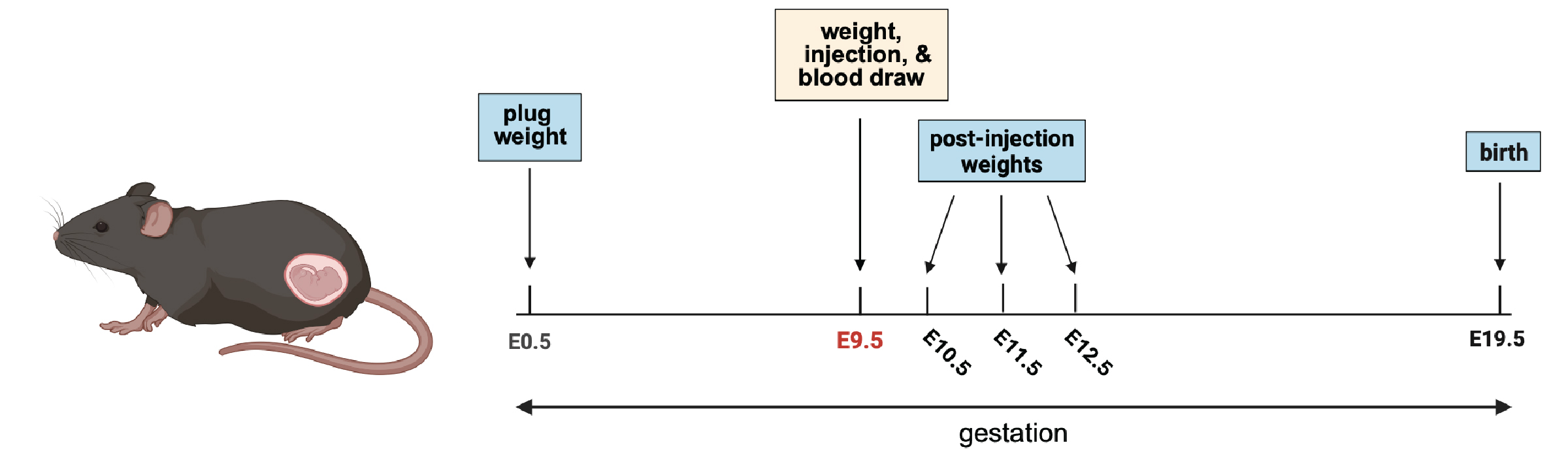
Neurodevelopmental disorders (NDDs) arise from complex interactions between genetic and environmental risk factors, including prenatal immune activation. While maternal immune activation (MIA) in mice is a widely used model to study environmental contributions to NDDs, variability in experimental outcomes limits reproducibility. Here, we present a standardized protocol for inducing MIA during early gestation at embryonic day 9.5 (E9.5) in mice, incorporating multiple quality control metrics to assess immune response and predict pregnancy outcomes. Following administration of polyinosinic:polycytidylic acid (poly(I:C)), maternal serum cytokines are quantified to confirm robust immune activation, allowing an exclusion metric for low responders. Maternal weight trajectories from E0.5 to E12.5 are predictive of litter viability, with dams that produced litters showing characteristic weight gain patterns distinct from dams that lost a litter. We also observed that animal vendor significantly influenced maternal immune response and litter viability, while poly(I:C) formulation was not a significant factor. Altogether, the protocol provides strategies to enhance reproducibility of the early-gestational MIA model and viability of the offspring through monitoring maternal immune response and weight changes as well as controlling for animal vendor to ultimately study the effect of prenatal immune activation on neurodevelopment.
Link to qmd codes
Rendered html